
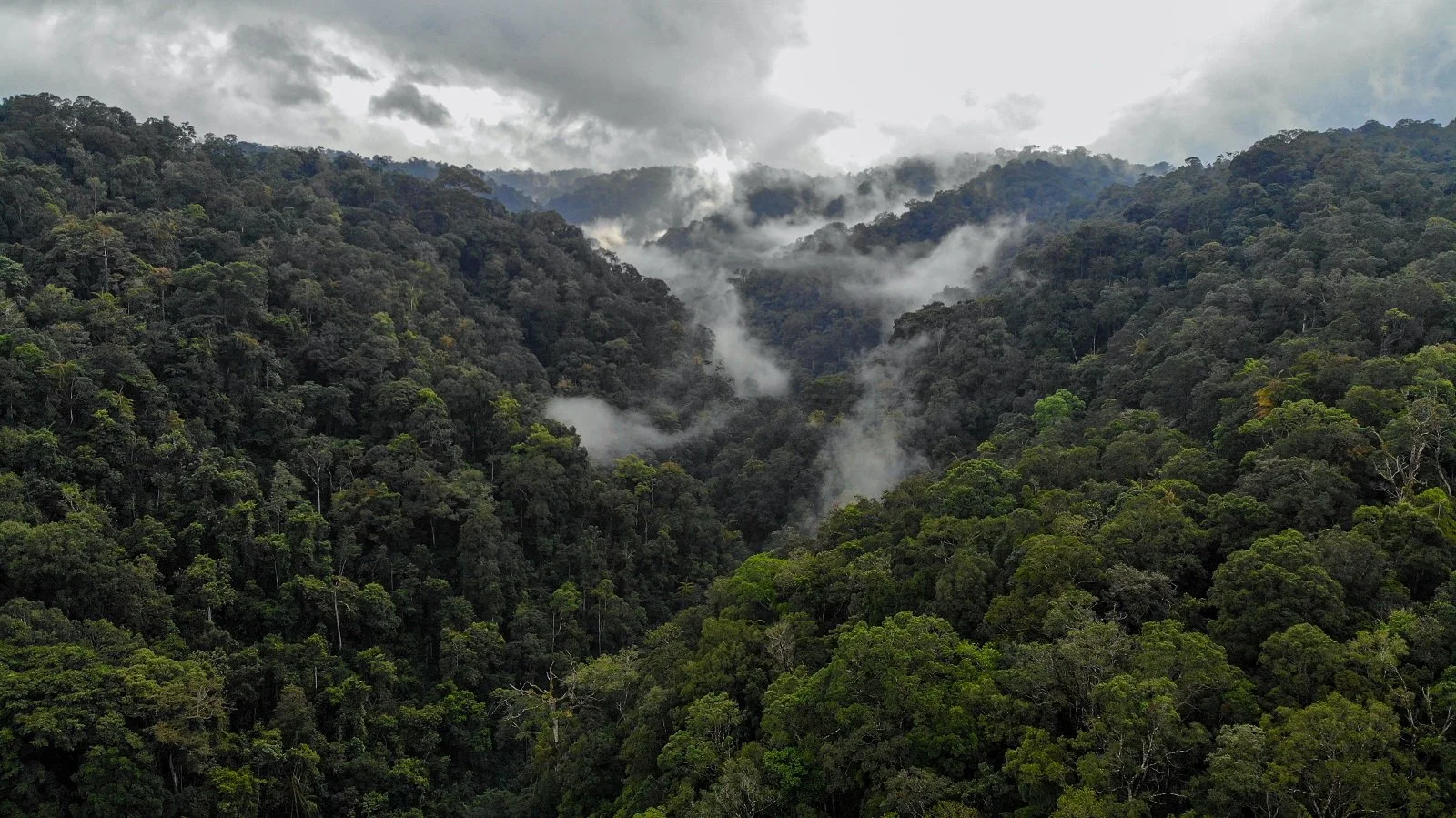
LUBUK PEKAK COMMUNITY FOREST
PROTECTING BIODIVERSITY, CARBON, AND CULTURAL HERITAGE IN JAMBI, INDONESIA
Jambi Province, in the center of Sumatra Island, Indonesia, is home to forests and peatlands that regulate water flows, store carbon, support biodiversity, and are lifelines for traditional communities such as the Talang Mamak, Orang Rimba, and Melayu peoples. Unfortunately, these rich landscapes are fast disappearing.
Natural forests used to cover 40 percent of Jambi in 2006, but by 2017 this had fallen to only 22 percent, based on Ministry of Environment and Forestry’s 2017 analysis of satellite images for Jambi. The impact of this rapid transformation has been felt by the local people, especially the Orang Rimba (Indigenous People) who are squeezed within palm oil plantations and no longer have space to practice their traditional way of life. Human-wildlife conflicts are multiplying, including with species such as elephants and tigers, leading to the loss of critically endangered species.
At the same time, local people clearly recognize the benefits of protecting forests – particularly the role of forests in maintaining water balance and avoiding erosion and protecting from natural disasters. In 2009, the two communities of Beringin Tinggi and Jangkat in Merangin District came together to stop an industrial tree plantation from replacing the 6,505 hectares of rainforest which stretches across their village areas. In 2013, the communities were granted management rights to the forest, which they named Lubuk Pekak (“calm water”) Forest after the river that runs through it.
The communities hold the legal rights for the management of the forest through a village forest management unit established and authorized by the village government. The Hutan Desa permits are valid through 2048, and can then be extended for another 35 years. The villagers primarily rely on perennial crop farming for their livelihoods. Smallholdings are planted with cinnamon, natural rubber, coffee, and dryland rice.
Lubuk Pekak Forest serves not only as an ecological space, but also as the center of the local community’s and Indigenous peoples’ cultural values. Kinship systems, customary consensus building, and traditional knowledge of plant and animal species are all aspects that the communities wants to safeguard and restore. These values ensure that the forest continues to be a source of livelihoods while remaining central to the cultural identity of the local communities.
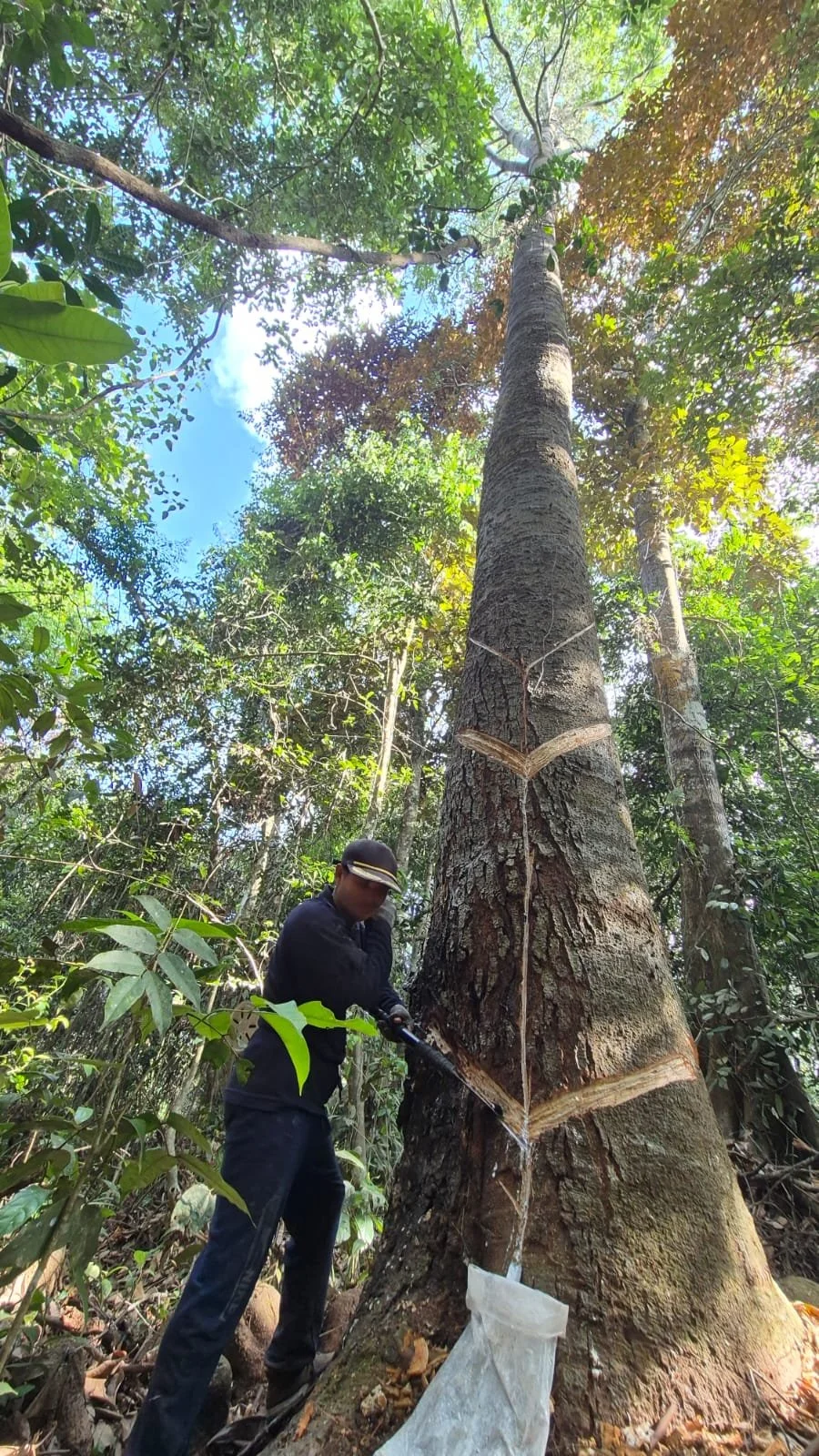
Harvesting latex from the Jelutung tree.
Photo credit KKI WARSI/FCF
BIODIVERSITY AND OTHER FOREST VALUES
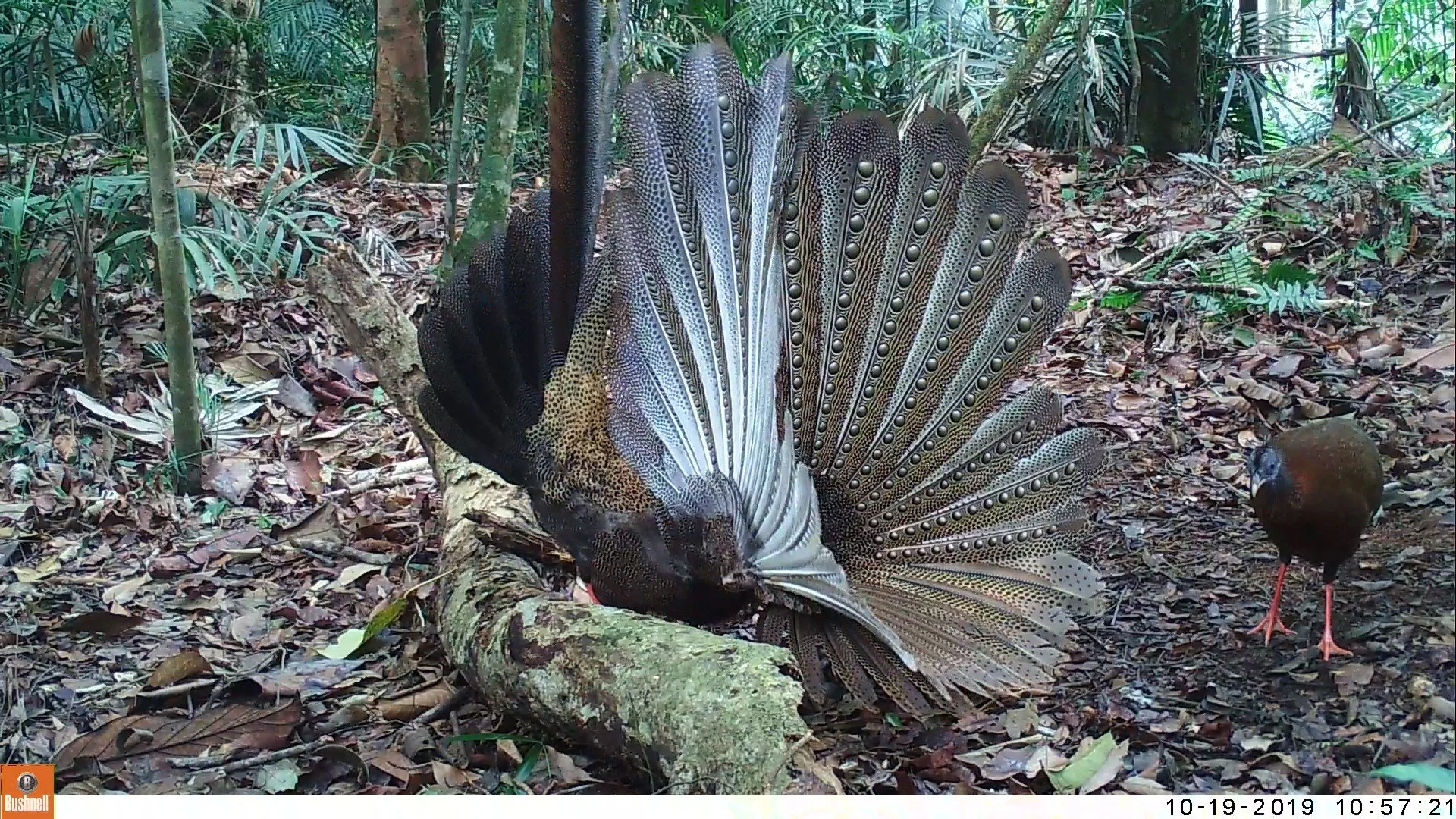
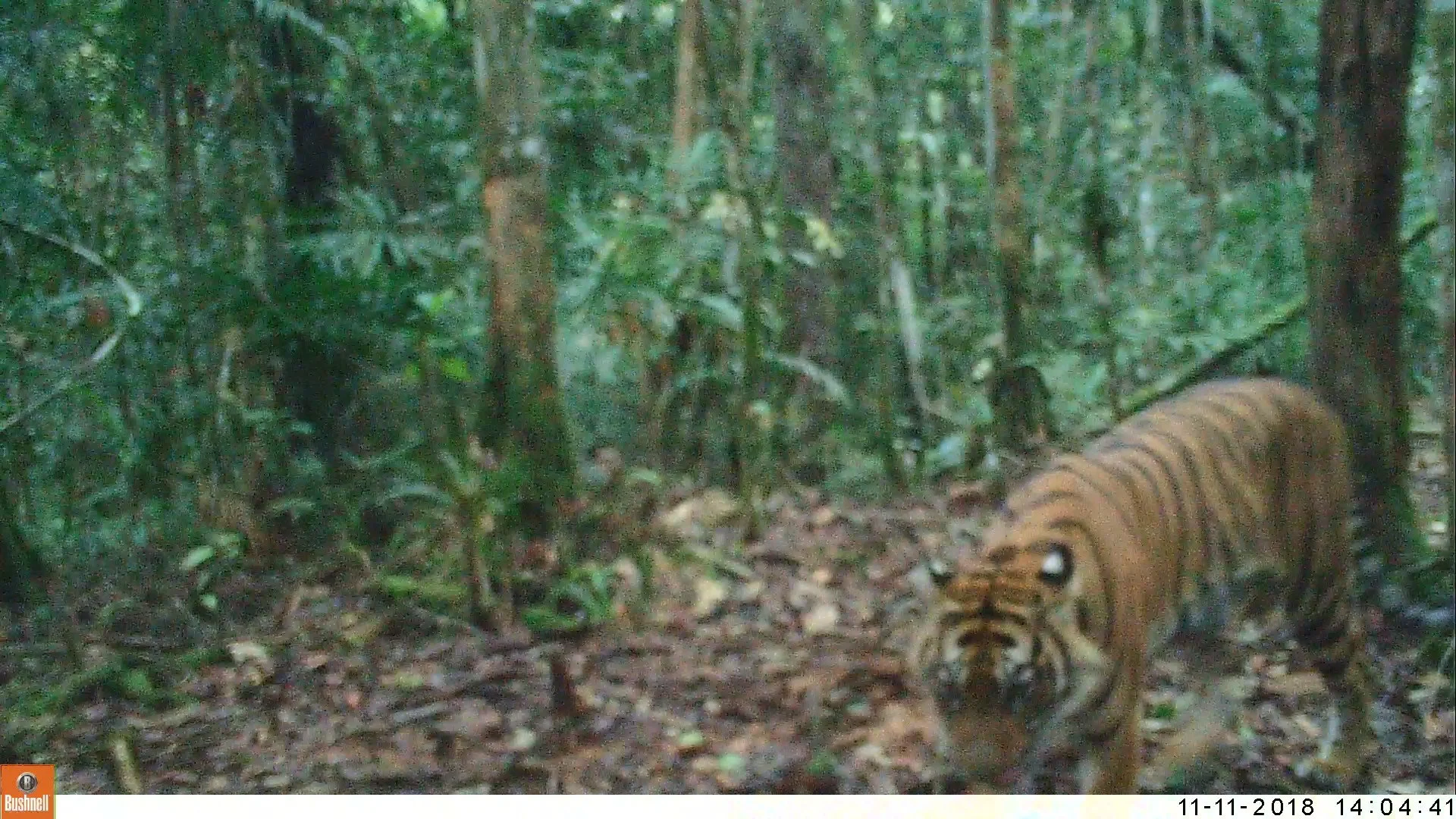
The forests of Lubuk Pekak provide habitat for several threatened animal species: Sumatran Tiger (Panthera tigris sumatrae - Critically Endangered), Siamang (Symphalangus syndactylus – Endangered), Oriental-pied Hornbill (Anthracoceros albirostris – Vulnerable), Great Argus Pheasant (Argusianus argus – Vulnerable), Clouded Leopard (Neofelis nebulosa – Vulnerable), Sun Bear (Helarctos malayanus – Vulnerable), Sunda Slow Loris (Nycticebus coucang — Vulnerable), and Rhinoceros Hornbill (Buceros rhinoceros – Vulnerable). Important plant species are also present, including the Critically Endanlgered Sumatra Pitcher-plant (Nepenthes sumatrana) and the Endangered Senkawang (Shorea sumatrana).
The forest is also an important source of non-timber forest products on which local people depend. Fiddlehead ferns, mushrooms, and fruits can all be collected from the wild, but their abundance depends on healthy, intact forests. The Jelutung tree (Dyera polyphylla) is tapped by local people for its latex, which is used as a chewing gum and also as a substitute for natural rubber. Keeping this forest standing also secures fresh water and pollinators for nearby farms.
GRANTEE TEAM
Indonesia Conservation Community (Komunitas Konservasi Indonesia, KKI) WARSI is an Indonesian non-profit organisation based in Jambi province. KKI WARSI has extensive experience in conservation activities in project areas in Jambi and West Sumatera, particularly in helping communities to develop conservation management plans, apply for social forestry permits, and implement conservation activities after being granted social forestry license to legally manage their forests.
FCF will be supporting KKI WARSI for conservation activities in Beringin Tinggi and Jangkat village forests including forest protection and management through the village forest scheme; capacity building of the local communities and village forest management institutions in protection and sustainable management of the forest; enhancing restorative economic businesses; development of environmental services such as ecotourism, tree adoption, and protection of wildlife; and sustainable water management for agricultural irrigation, micro-hydro power plants, and clean water supply. This will involve the participation of local government and forest management institutions, as well as women’s and youth groups.
THREATS
The main threats to Beringin Tinggi and Jangkat village forests are deforestation resulting from forest encroachment for plantation, illegal logging, and mining activities. These activities diminish biodiversity, destruct the ecosystem, and reduce forest conservation values.
The activities that can specifically lead to deforestation and degradation are as follows:
1. Land use change: The conversion of forest areas into cinnamon, coffee, palm oil, and natural rubber cultivation that can displace the natural habitat of endemic wildlife and rare plant species.
2. Illegal logging: Illegal timber exploitation reduces forest cover and disrupt natural regeneration.
3. Illegal gold mining (PETI) degrades natural landscape, pollutes water, and reduces ecosystem quality
4. Road/infrastructure construction, which facilitates forest access and encourages new encroachment.
PROJECT ACTIVITIES
1. Installation of village forest boundary markers
2. Development a 10-year village forest management plan and the subsequent annual workplan
3. Conduct regular patrols to village forest areas using Android-based SMART application
4. Rehabilitation of 50 hectares of degraded village forest areas by planting them with 25,000 mixed local seeds from the nurseries in Beringin Tinggi and Jangkat villages
5. Development of restorative economic initiatives within the village forest areas and outside the village forest areas
6. Development of tree adoption donation program in the protected areas of the village forest
7. Conduct preparation and implementation of carbon trade in the village forest areas
8. Conduct policy advocacy to get funding support for the management of village forests from the National Budget (APBN), Local Budget (APBD) and village Budget (APBDes)
QUICK STATS
Area: 6,505 ha
Threatened Wildlife: Siamang (Symphalangus syndactylus – EN; Oriental-pied hornbill (Anthracoceros albirostris – VU); Great argus (Argusianus argus – VU); Clouded leopard (Neofelis nebulosa – VU); Sumatran tiger (Panthera tigris sumatrae - CE); Sun bear (Helarctos malayanus – VU); Sunda slow loris (Nycticebus coucang — VU); Rhinoceros hornbill (Buceros rhinoceros – VU).
Grantees: KKI WARSI
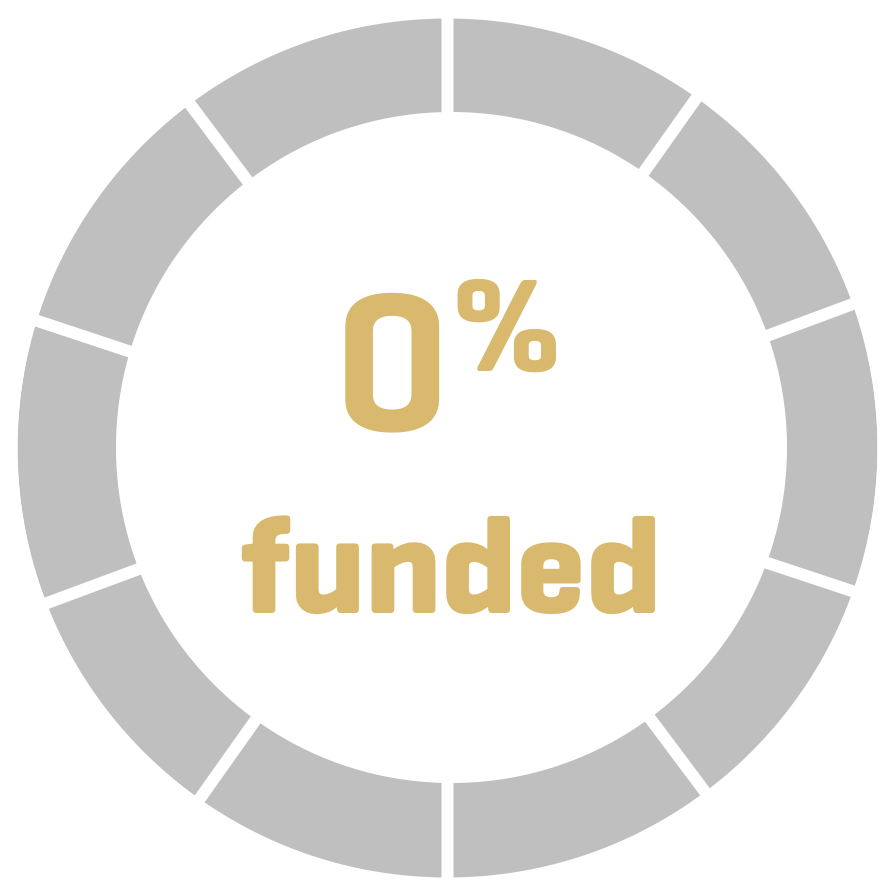
Funding status: Unfunded
Commodities in this landscape: Coffee, natural rubber, cinnamon, dryland rice